

About Me
i'm Professor Jo Ann Caplin
Caplin Science & Art Talks©.
Welcome to Professor Jo Ann Caplin’s adult lifetime learning Science+Art Lectures.
You will find on this site, links to live or video lectures about the relationships between science and art, as well as detailed lectures about certain artists or one of their works.
There is a small fee for the online lectures. After you sign up, leaving your email, you will receive via email the Zoom or Video link for the lecture.
Professor Caplin also is available for in-person lifelong learning lectures.
About Me
I'm Jo Ann Caplin
The Relationships Between
Science & Art
Although when people still say to me, “I don’t get it, what do they have in common?” If you believe that art is intuitive and emotional, and that science is technical and logical, we are reminded that making art itself can be complicated and technical, and that the best of the scientists are intuitive.
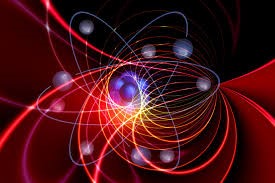
From the CERN Collider
The Talks
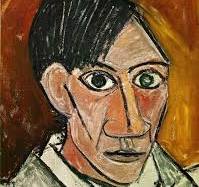
TALK #2. PICASSO AND THE BIRTH OF CUBISM
Do you know what influence American Gertrude Stein had on Picasso, and why it took 90 sittings for him to paint her portrait? What influence did photography have on creation of Cubism? Or even the discovery of radiation and X-rays? Do you know what painting of Matisse’s created in Picasso a jealously so great, he was obsessed to do something more original?
This hour will include Picasso’s childhood and his move to Paris, where he met people and ideas that helped develop a new art form. The hour will explore the intellectual, cultural, and scientific ideas he was exposed to when he moved to Paris, so this artistic prodigy could make a name for himself, change the direction of Western art, and usher in the Modern Era.
Tuesday February 17.
4pm Eastern time
1PM CA time, $25.
Please leave your email so I can send the Zoom link.
TALK #1. SCIENCE AND ART, TOGETHER
Do you know the secret of Mona Lisa’s smile? Did you know that when Newton discovered how the prism broke up light into various colors, Vermeer, too, was studying light in his paintings? Do you know when it comes to vision, what you see first? Do you know why we often think of science and art as two different areas of study? This talk takes you from the 14th century to today, as we explore how science and art depend on each other in terms of paint itself, light, mathematics, physics, and brain science.

The love of complexity without reductionism makes art; the love of complexity with reductionism makes science.
—E.O. Wilson
The most beautiful thing we can experience is the mysterious. It is the source of all true art and science.
-- Albert Einstein, What I Believe, 1930
The arts like the sciences start in the real world. Then reach out to cue possible worlds, and finally to all conceivable worlds.
-- Edward O. Wilson, Consilience
The function of art is… an extension of the function of the brain—the seeking of knowledge in an ever-changing world.
-- Semir Zeki, INNER VISION
Human subtlety will never devise an invention more beautiful, more simple or more direct than does nature, because in her inventions nothing is lacking, and nothing is superfluous.

